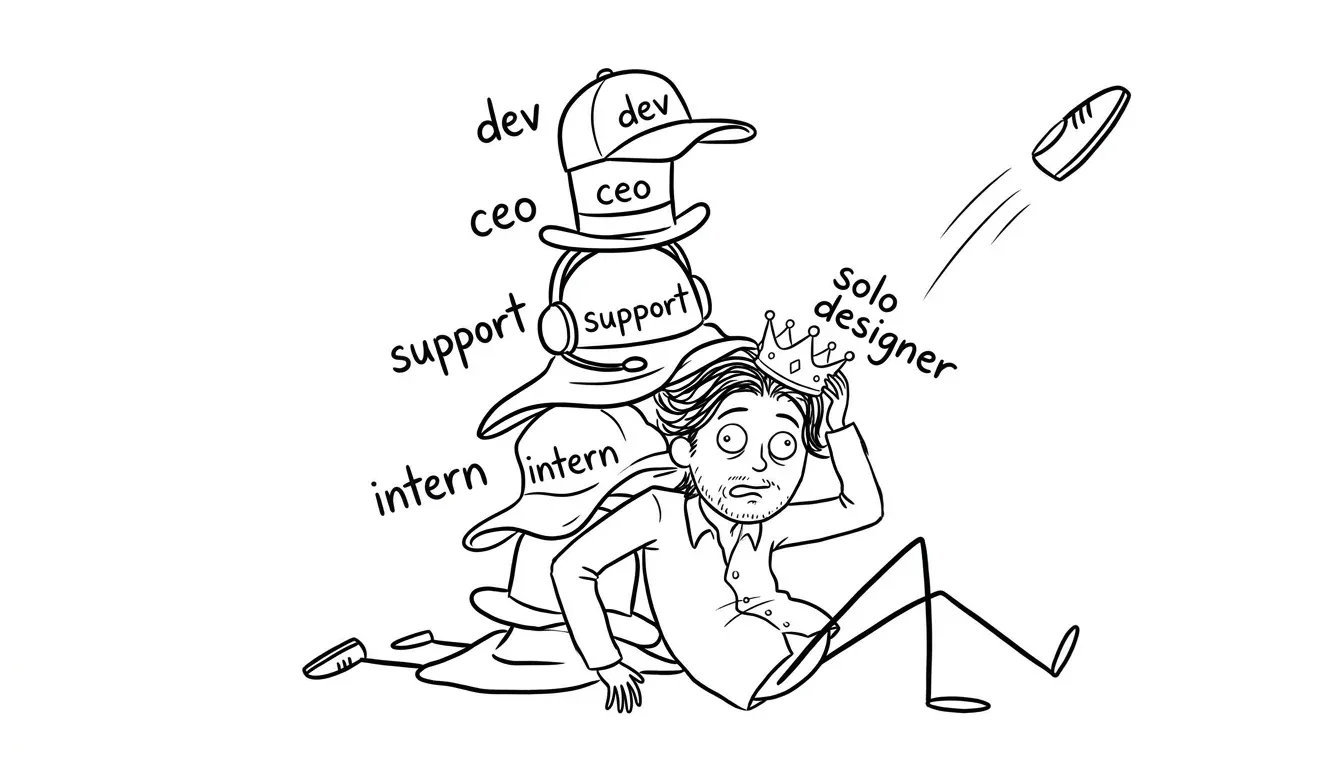
Five years is a long time to stay anywhere. And if you want to understand why I left my role as solo product designer at VALK, the honest answer isn’t dramatic. No blowup. No better offer waiting. Just a quiet realization, somewhere around late 2024, that the thing exciting me most wasn’t the thing paying me. I’d been the only designer at VALK - now rebranded to datai - for five years and two months before I walked away in February 2025.
This is the first thing I’ve written for this blog, so bear with me finding the voice. I’ll just tell you what actually happened.
What VALK was, and why it mattered
When I joined VALK in November 2019 I was the only designer. Not “lead designer with a team underneath” - actually the only one. Every pixel that shipped went through me.
The platform was built on R3’s Corda blockchain for institutional digital assets. Private markets, illiquid assets, end-to-end transaction infrastructure for the kind of clients who don’t mess around - 70+ investment banks, hedge funds, and asset managers across 15+ countries. $4B+ in annual transaction volume running through a product I designed.
I built the design system from scratch. The full transaction platform UX. A DeFi analytics product called Merlin that eventually pulled in 50K+ unique visitors and monitored $5B+ in portfolios. The company won five industry awards including the Swiss Fintech Awards and got covered in Forbes, CNN, and Yahoo Finance.
I’m not listing those numbers to brag. I’m listing them because they matter for understanding what I walked away from. This wasn’t a struggling startup I was escaping. The work was good. The platform worked. The clients were real institutions moving real money.
And I still left.
The boredom nobody talks about
Here’s the thing about being solo designer at a B2B fintech for five years: you get really, really good at a very specific thing.
Institutional dashboards. Transaction flows. Data tables with 40 columns. Compliance screens. The UX patterns for “a hedge fund analyst needs to review a digital bond issuance at 2am from their phone” - I know that problem deeply. I could design it in my sleep, and toward the end, I basically was.
By 2024 I could sit down in Figma, design a complex fintech feature, spec it for the engineers, and write the documentation in a day. What used to take a week took a day. That sounds like growth but it’s actually a yellow flag. When the difficulty drops that far below your current skill level, you’re not learning anymore - you’re executing.
The work was technically solid. I just stopped caring about it.
That’s uncomfortable to say because VALK was a genuinely good product doing genuinely important infrastructure work. The people weren’t the problem. The exit wasn’t bad vibes - it was boredom and curiosity pulling harder than comfort.
When I started noticing the gap
March 2023. That’s when I started doing AI work on the side.
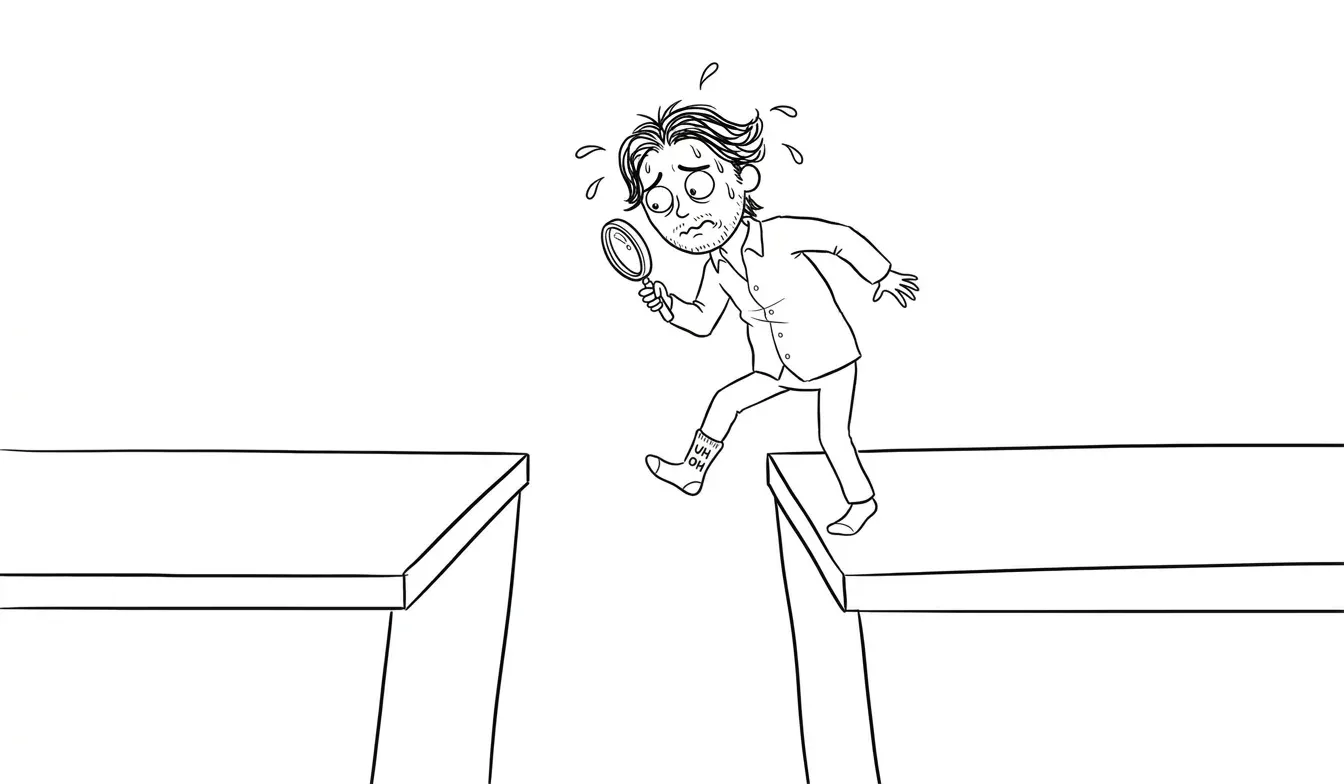
Not because I had a plan. Because ChatGPT had just dropped and I couldn’t stop thinking about what it could do. I started building small things - automation workflows, prompt systems, early agent prototypes. Nothing production-ready, just me poking at a new technology the same way I used to poke at new design tools.
The difference was how it felt. I was doing side projects at 2am and not feeling tired. That’s the tell. When you’re doing something that doesn’t drain you even when it should, pay attention.
By mid-2023 I was building autonomous agents with custom personalities for community management and content creation. End-to-end automation workflows in n8n and custom Python. AI-powered music generation pipelines stacking GPT-4 + Suno + Midjourney + ElevenLabs into something that actually sounded like it was made by a person. Not demos - working systems I was shipping and iterating on.
Meanwhile at VALK, I was designing another data table.
The gap between the two tracks kept widening. By late 2024 it was obvious. I wasn’t going to close it while staying in the same seat.
Why I didn’t leave sooner
Honest answer: salary, stability, and the sunk cost of being good at something.
Five years of context in a product is genuinely valuable. I knew every edge case, every integration, every place the design system had technical debt. Starting over in something new meant being a beginner again - and being a beginner doesn’t pay the same as being the person who built the whole thing.
There’s also a particular trap that hits people who are technically capable: you can justify staying because the work isn’t bad. It’s not bad. It’s just not growing you. “Not bad” is a terrible reason to stay somewhere, but it’s a compelling one in the moment.
I also had no clear destination. “I want to do more AI stuff” isn’t a career plan. I didn’t have a product to go build, a company to join, or a client waiting. Just a direction. That’s terrifying when you’re used to a steady paycheck.
What finally tipped it was realizing I was doing the interesting work anyway - just not getting paid for it, and not going deep enough on it because I was saving bandwidth for the job. I had to make a choice about which track was real.
What actually made it hard to leave
This isn’t a story about walking away from a soul-crushing corporate grind. I want to be clear about that because those stories are everywhere and this isn’t one of them.
VALK was a legitimately good place to work. Async-first by nature - I’ve been no-calls only for years, and that environment respected it. The team was small and technical. The problem domain was interesting. I had real ownership over a real product.
The hard part was that I was leaving something good. Not escaping something bad. That’s a different emotional math.
When you leave something bad, there’s relief. When you leave something good, there’s mostly just uncertainty. You’re trading a known quantity for a direction.
I also felt something like guilt about my design craft. Five years of building that specific muscle - institutional fintech UX, complex data visualization, multi-jurisdictional compliance patterns - and I was shelving it. That felt like waste. It took me a while to see that the design background wasn’t being shelved, it was being folded into something new. But I didn’t have that clarity on the way out.
Why I left my role as solo product designer at VALK: the honest version
People want a clean narrative when someone makes a big change. The “I had an epiphany” story, or the “the company changed” story, or the “I always knew I’d do this eventually” story.

None of those fit.
The real reason I left my role as solo product designer at VALK after five years is genuinely mundane: I felt like a dinosaur. The world was changing fast, I was sitting still, and I couldn’t make peace with that.
AI wasn’t an abstraction to me by then - I’d been building with it for almost two years on the side. I knew what was possible. I knew what I could build if I went all-in. And I knew that every month I stayed was a month I wasn’t building those things at the depth they deserved.
That’s it. No grand vision. No ten-year plan. Just the thing that excited me most wasn’t the thing paying me, and eventually that gap gets too loud to ignore.
What came next
February 2025 I went full AI specialist.
The work I’ve been doing since: building multi-agent systems, OSS CLI tooling, automation workflows that actually handle real complexity. My crypto background from 2021 - shipped tokens to $10M+ market cap, raised $140K in presale in 72 hours - means I’m not new to the intersection of technical infrastructure and product. The combination of design, AI engineering, and crypto is genuinely rare and I’m still figuring out how to use it.
What I’m not doing is pretending I have it figured out. Sustainable income without a salary is a real problem I’m actively working on. The freedom to build what I want comes with the anxiety of not knowing what next month looks like. That trade is live and unresolved.
What I do know: I’m not bored. I sit down to work and lose track of time. That’s the benchmark I didn’t know I was missing until I had it back.
If you’re in a similar spot
I’m not going to tell you to quit your job and follow your passion. That’s not advice, that’s a bumper sticker.
What I will say: if you’re doing the interesting work anyway - on nights and weekends, in the gaps between the real job - that’s data. You’re already telling yourself what you want. The question is whether you’re listening.
The gap between what I was doing at VALK and what I could build with AI was too wide. For me, the answer was to close it. Your math might be different.
But “not bad” is not the same as “right.” Know the difference.
If you want to follow what I’m building from here - multi-agent systems, AI tooling, the whole mess of going independent - this blog is where I’ll document it. You can read more ADHD and AI, or browse by why most AI products have bad UX if you want to find something specific.