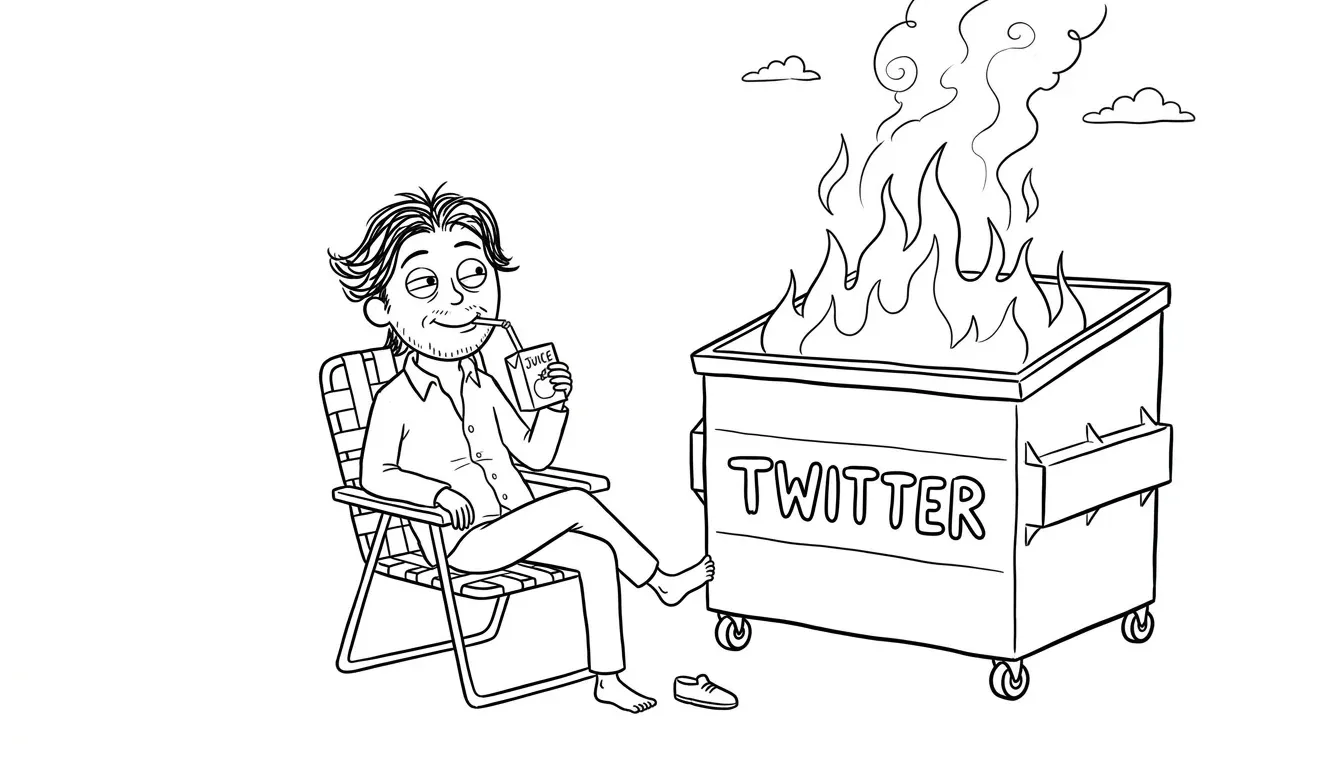
I stopped posting on Twitter for two months. Not a planned break, not a “digital detox,” not a strategic rebranding pause. I just… forgot. This is what actually happened when I disappeared from X (Twitter) for October and November 2025, and what I learned about taking breaks you didn’t mean to take.
How I stopped posting on Twitter for 2 months without meaning to
September 6 was my last post before the gap. A week later I tweeted “staying away from X for a few days, wonder if it ruins reach” and then proceeded to vanish for two full months instead of a few days.
I wasn’t planning that. There was no decision point where I said “I’m taking a break.” I was building. Seven apps in parallel, deep in agent architecture, ADHD hyperfocus locked in. Twitter stopped feeling like a place I existed in. Not because I was boycotting it or burned out on the discourse. I just got absorbed and the habit broke.
That’s the honest version. Not a detox story. I didn’t meditate more. I didn’t reclaim my attention span through discipline. I got pulled into something more interesting and social media fell off naturally. That’s how ADHD actually works - when something grabs you hard enough, everything else gets crowded out.
The gap ran October through November. I came back January 26, 2026 with one post: “I’m back because of Clawdbot meta.” No apology, no “I’ve been doing some reflection,” no thread about what I learned. Just back.
What actually happened to reach when I stopped posting on Twitter
Short answer: yes, disappearing kills your numbers. I came back to impressions that were noticeably down from where they were in September. The algorithm punishes inconsistency in ways that are both predictable and annoying.
Here’s what surprised me though - my follower count barely moved. The people who followed me for real reasons didn’t unfollow during a two-month gap. They just… waited. Or forgot I existed but kept the follow anyway, which is functionally the same thing.
What did drop off were the engagement-farmers. The follow-back accounts, the people following hoping for a mutual, the ones gaming numbers. When I stopped posting, I stopped being useful to them. They left. Good.
So the actual damage from a two-month absence was:
- Impressions down significantly on return
- Algorithmic reach basically reset
- Genuine followers intact
- Low-quality followers gone
That’s not catastrophic. It’s annoying if you’re trying to grow on a consistent curve, but it’s not irreversible. Coming back with something real to say matters more than the reach penalty.
The platform rewards consistency, but it doesn’t erase you for breaks. It’s not that vindictive. It just forgets you for a while and you have to re-earn distribution. Which, to be clear, still sucks. But it’s survivable.
Research from the Reuters Institute Digital News Report backs this up - audiences don’t actively track individual creator absences the way creators fear they do. People are mostly watching the feed, not waiting for you specifically.
Building in public culture and why it makes breaks feel worse than they are
There’s a specific kind of pressure that comes with building in public. The implicit rule is you have to be visible. Posting daily “day 47 of building X” content. Sharing every milestone. Being present enough that people remember you exist.
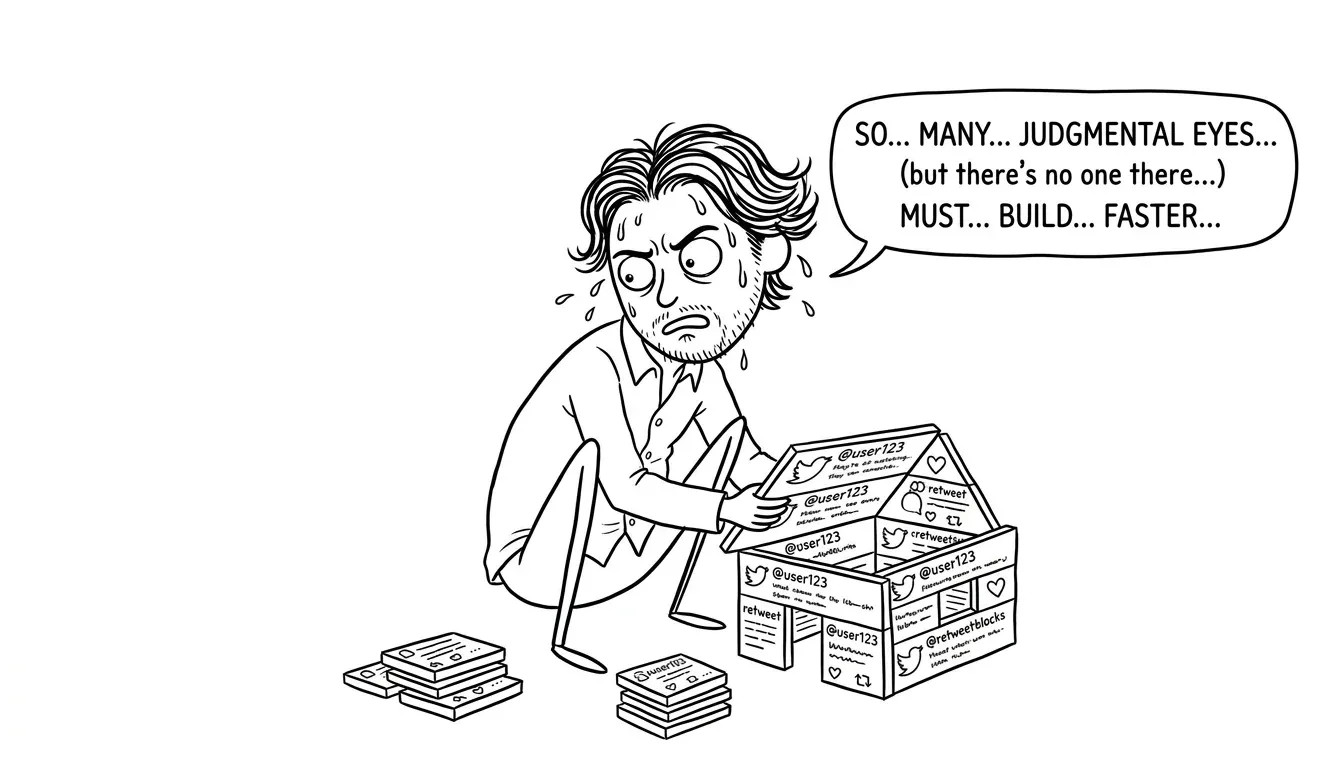
Miss a week and you feel like you’re falling behind. Miss a month and it feels like career death. I’m not immune to this feeling. I’ve been building in public for long enough to have internalized the assumption that visibility = momentum.
But the two months proved that assumption wrong in at least one direction.
I built more in those two silent months than in the three months of posting before them. Seven apps. Real infrastructure. Clawdbot, which ended up being the thing I came back to announce. When you’re not performing the work, you’re just doing it. Turns out those are different modes.
The building in public model optimizes for consistency of output, not quality of output. There’s value in that - accountability, community, people following along with the journey. But it can also turn into a content treadmill where the posting becomes the thing instead of the building.
I’m not saying building in public is bad. I’ll keep doing it. But I’m now aware that the ADHD hyperfocus mode where I forget Twitter exists and just build for two months is also a valid mode. Maybe more productive in certain phases.
The ADHD angle: forgetting to post is not a failure
Everyone talking about “intentional breaks” from social media has the same energy: “I realized I needed to step back and prioritize my wellbeing.” Very deliberate. Very curated. Very LinkedIn.
That wasn’t this.
I didn’t decide to take a break. The habit just… dissolved. I was on a 2am coding session in early October, deep in something, and the thought of tweeting about it didn’t occur to me. Same the next night. By week two the pattern was just gone.
This is textbook ADHD. The executive function overhead of maintaining a social media posting habit - opening the app, forming a thought worth sharing, hitting post, checking the response - that whole loop requires a certain baseline attention budget. When something captures all of it, the habits that depend on leftover attention just stop running.
The ADHD and executive function research out of Harvard Medical School explains this pretty well - executive function isn’t a moral failing, it’s a resource allocation problem. When the resource is fully committed elsewhere, discretionary habits are the first to drop.
I’ve made peace with this. It’s not undisciplined, it’s just how my brain allocates. The flip side of forgetting to post for two months is also why I can build seven apps in parallel while maintaining an agent system that runs 14 cron jobs. Same mechanism, different outputs.
If you have ADHD and you’ve done this - gone silent for weeks because you were deep in something - it’s not a failure mode. It’s just the cost of the hyperfocus that also lets you ship faster than most people.
The trick is not building your brand strategy on a foundation that requires daily consistency you won’t reliably deliver. Build it on depth instead. One good post after two silent months is worth more than sixty filler posts.
What “coming back” actually looks like
January 26. “I’m back because of Clawdbot meta.”
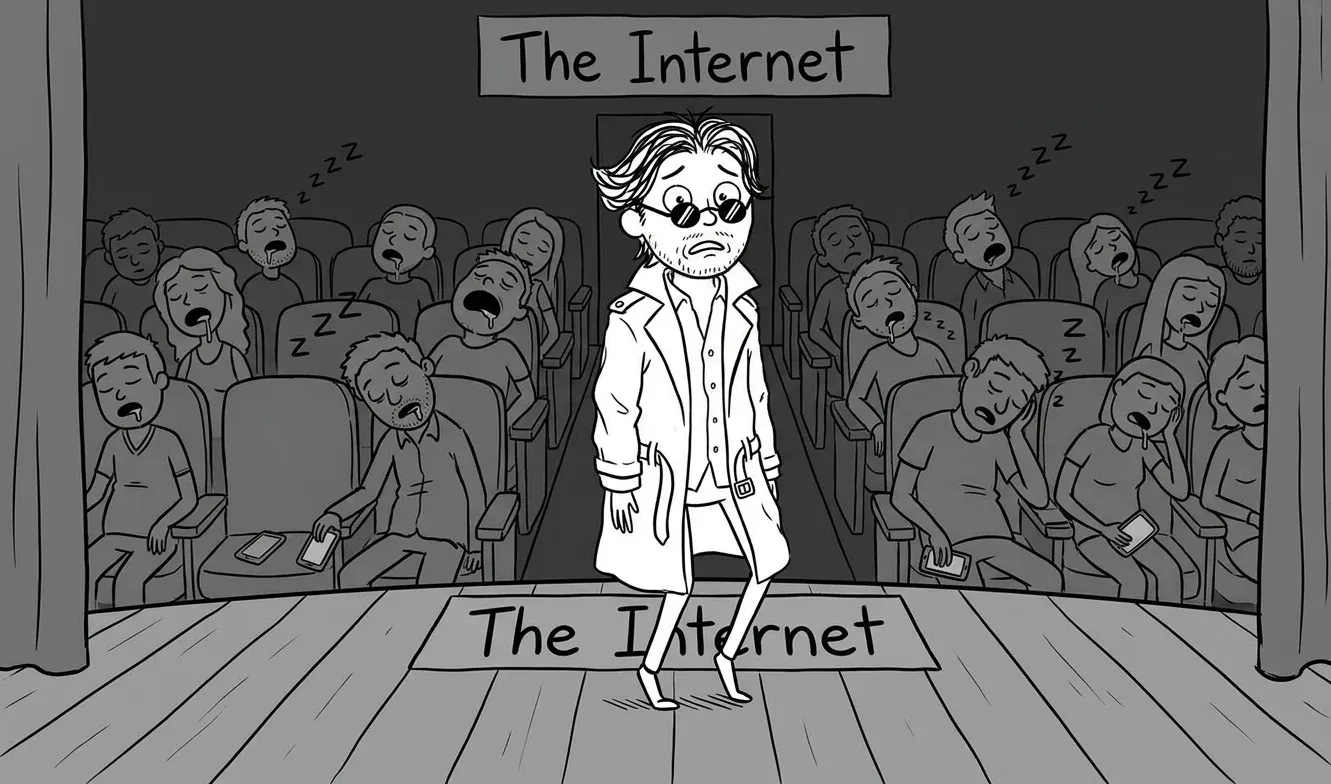
That was the whole post. No explanation, no recap thread, no “here’s what I learned while I was away” (except this post, I guess). Just the most direct possible signal: I exist, I have a reason to be back, here’s the thing.
This felt right. The alternative - the big return post with the reflective thread - felt like it was performing a story instead of just getting back to work. The people who care will engage with the work. The people who need a narrative about why you were gone aren’t really your audience anyway.
I did get some “welcome back” responses. More than I expected, honestly. A few people had noticed the gap and were curious what happened. That was kind of nice - it meant the previous presence had registered as real enough that the absence was notable.
But the bigger signal was that nobody was mad. Nobody had been waiting with a timer. The internet doesn’t work that way. People move on, the feed keeps moving, and when you come back with something worth seeing, you get traction again.
What I’d tell someone about to take (or accidentally start) a social media break
Not going to frame this as advice, because I didn’t plan any of it. But if you’re reading this because you’ve already been gone for a month and you’re wondering if you’ve tanked your presence - you probably haven’t.
A few things that are actually true from experience:
Genuine followers don’t leave during a two-month absence. The people who followed you for real reasons are still there. The follower count number that matters is quality, not quantity, and quiet people who actually care about your work have more patience than the algorithm does.
Your reach will take a hit and that’s fine. You’ll rebuild it. Reach is lagging indicator of consistency, and consistency can be rebuilt faster than you think when you come back with something real. I came back with Clawdbot. That gave me actual things to say.
The building you do during the silence compounds. Those two months produced more than the three months of documented-daily-grind before them. There’s something to that. Not every phase of building should be public. Some of it needs to be quiet.
The “building in public” pressure is real and mostly self-imposed. The audience you’re building in public for is smaller and more patient than the anxiety makes it seem. If you’re good at what you do and you come back with evidence of it, people remember.
And if you have ADHD and you just disappeared because something grabbed you - that’s the mechanism working, not failing. The work you did in the silence is the asset. The posts are just distribution for it.
What stopped posting on Twitter for 2 months actually cost me (and what it didn’t)
I have how I grew to 500 followers where you can see the full context of what I work on - design background, fintech, AI engineering, all of it. None of it died during two months off Twitter.
The projects I was building kept building. The systems kept running. The professional relationships that matter don’t live on Twitter anyway - they live in Discord servers, in direct messages, in shipped product people can actually use.
Twitter is distribution. It’s a real tool and a decent one for this type of work. But it’s not the substrate. The work is the substrate.
The two months off X taught me that more than anything. When the posting stopped, nothing important stopped with it. The important stuff was already running somewhere else - in the codebase, in the agent system, in the products actually getting built.
Coming back felt like turning a tool back on. Not like returning from exile.
That’s the right relationship to have with it. Check what I was building instead to see what came out of those two silent months. And if you want context on how Twitter’s algorithm actually handles inactive accounts, X’s own creator documentation doesn’t spell it out cleanly - but the pattern from third-party analyses is consistent: reach drops fast after ~2 weeks of silence, then stabilizes, then rebuilds within a few weeks of returning.
The algorithm is back to punishing me for the gap. I’m fine with it. The seven apps I built during the silence are more valuable than consistent impressions metrics would’ve been. Trade you’d make again without thinking about it.