SEO Is Dead. Long Live GEO.
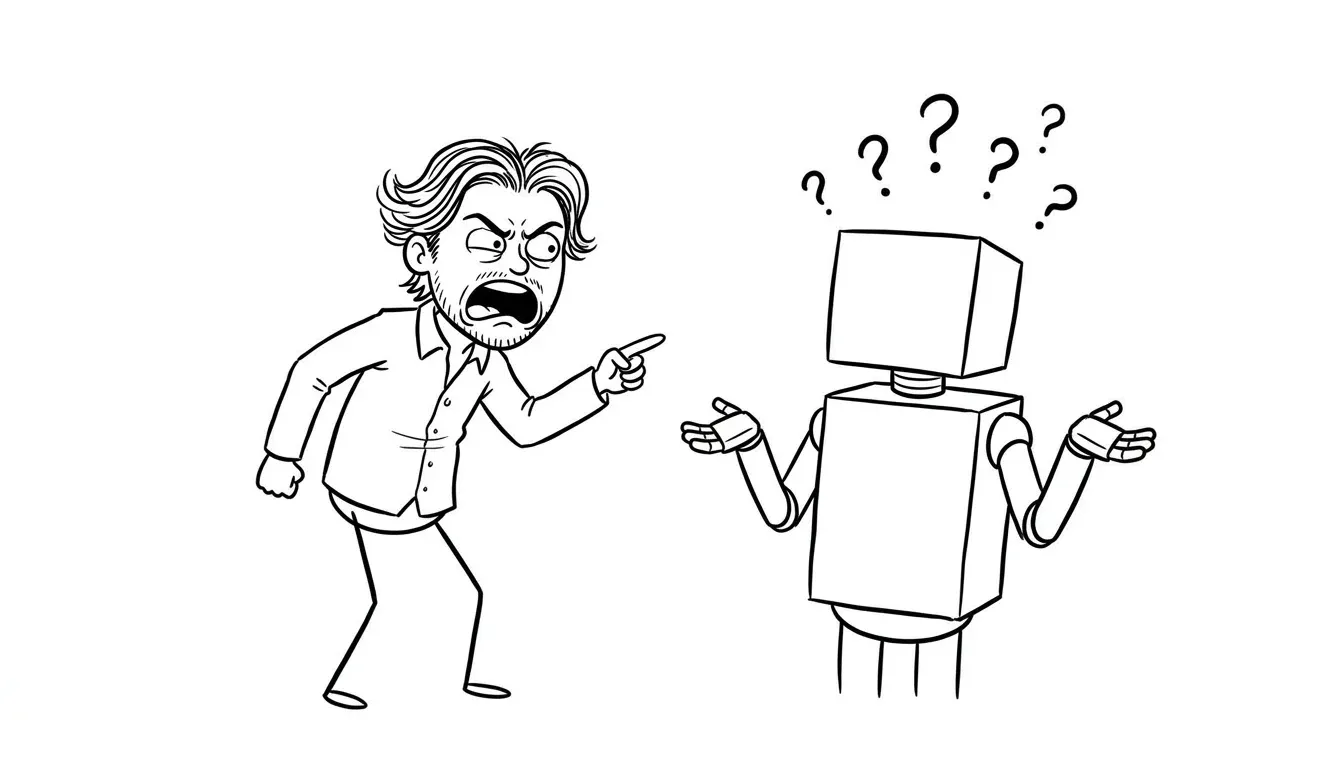
I asked ChatGPT who I am. It didn’t know.
I’ve been building AI agent systems since March 2023. I run 15+ specialized agents daily, the kind that read my files, schedule my work, draft my content, and remember what I told them last Tuesday. I designed a $4B+ investment platform at VALK used by 70+ banks across 15 countries. I shipped 31 open-source Rust CLI tools. Published 13 blog posts. None of that registered.
The ironic part: I know how these models work. I use them every day. I build on them. And they have no idea I exist.
If I know ChatGPT, ChatGPT should know me too.
That bothered me enough to actually do something about it.
The two games nobody told me were two games
Here’s what I figured out about a week into chasing this. Being findable by Google and being citable by AI are two different sports.
I had the first sport down. I run blog.deeflect.com, I have a Wikidata entity, I show up in normal Google searches when you type my name. That’s table stakes. That’s the SEO game I’ve been playing since 2010 with various brands.
The other sport? The one where a language model includes you in its answer when somebody asks “who are the indie AI builders worth following”? I wasn’t even on the field. I was in the parking lot.
So I did the thing I do when I get nerd-snipped by a problem I can’t ignore. I went deep.

What’s actually happening to search
Quick reality check, because some of you are still rolling your eyes at the title.
BrightEdge’s 2025 data says AI Overviews now appear in roughly 11% of queries and that organic CTR on those queries is down about 30%. That number gets uglier the more your business depends on informational keywords, because those are the queries Google is happiest to answer with an AI box at the top.
People aren’t scrolling. They’re asking. ChatGPT alone has a billion users a week. Perplexity is growing. Claude. Gemini. The behavior pattern is the same: ask a question, accept the synthesized answer, click out only if something inside the answer pulled them.
This is not a future trend. This is a present-tense trend you can watch in your own analytics if you’re brave enough to open them.
Some of your traffic just stopped scrolling. It’s not lost. It’s been consumed upstream.
Section 3: SEO isn’t dead, relax
Now the title is provocative on purpose, so let me undo it before it metastasizes into the wrong takeaway.
SEO is not dead. Anyone telling you to burn your SEO playbook is selling you a new one.
Here’s the stat that did the most work in my head: seoClarity, late 2025, found that 99.5% of AI Overview citations come from the top 10 organic results. Read that again. The AI box at the top of Google is, almost without exception, citing pages that already rank on page one for the underlying query.
If you’re not doing SEO, you’re not even eligible to be cited.
The same pattern shows up across the other engines. Pages that rank well on Google get pulled into AI answers. Pages that don’t, don’t. The traditional ranking signals (good content, real backlinks, technical hygiene, freshness) still matter. They are now the prerequisite rather than the product.
So the relationship isn’t SEO versus GEO. It’s SEO and then GEO. SEO gets you into the eligible pool. GEO determines whether you get pulled out of the pool when an AI is composing an answer.
That’s the boring, accurate version of the story. The dramatic version sells courses.
What is GEO and why it matters
GEO stands for Generative Engine Optimization. The term comes from the foundational paper by Aggarwal et al. presented at KDD ‘24 (arxiv.org/abs/2311.09735). They built a benchmark of 10,000 queries, ran them through generative engines, and measured what kind of source content the engines actually cited.
The shift the paper formalizes is the one I’d been feeling without having a name for: the goal moved from “rank #1” to “get cited in the answer”.
The paper found that specific, concrete moves on a source page produced up to a 40% boost in visibility inside generative answers. Two strategies dominated:
- Citation density. Pages that themselves cite credible sources get pulled forward more often. Models are trained to trust pages that look sourced.
- Statistics density. Specific numbers, dates, percentages, and named studies act as anchors the model reaches for when it needs to back a claim.
That second one matched my own observation almost exactly. Every time I’d noticed an LLM cite somebody, the cited page had numbers in it. Real numbers. Often numbers the writer had personally measured.
Not “AI is growing fast.” But “AI Overviews appear in 11% of queries and CTR is down 30%.”
That’s the move.
The data that rewired my thinking
I want to flag a few specific data points that changed how I think about online presence. Frame each through what it did to my brain when I read it, not as some abstract industry trend.
Ahrefs, 2024: brand mentions correlate at 0.664 with AI citation. Backlinks correlate at 0.218.
That number hit me. For two decades, “build backlinks” has been the cardinal commandment. According to that data, brand mentions are roughly three times more predictive of getting cited by AI than backlinks are. A nofollow mention of your name on a podcast transcript may now be doing more work than a do-follow link in a niche directory.
That single stat reorganized half of my thinking about distribution. It pushed me toward writing under my own name on more surfaces, not chasing more link placements on fewer.
SparkToro, 2025: established brands appear in 55-77% of AI responses for their core query set. Unknown brands have 70x volatility.
If your brand is established, AI is your best friend. The same query, asked ten different ways, surfaces you consistently. If your brand is fresh, AI is a coin flip. Identical queries can return wildly different cohorts of names because the model has no stable signal for who you are.
That second number is the scary one for indie founders. You’re not competing on quality. You’re competing on signal stability, which is mostly a function of how often, how consistently, and how named you appear across the network.
Semrush, 2025: nofollow links matter almost equally for AI visibility.
The link-juice mental model from 2010-era SEO is breaking. The model isn’t reading dofollow flags. It’s reading mentions, context, and the company you keep across the wider web.
I read those three findings back to back. Closed the laptop. Went for a walk. Came back and started rewriting my distribution strategy.
What I built
When I get nerd-snipped, I don’t write a tweet. I build a thing.
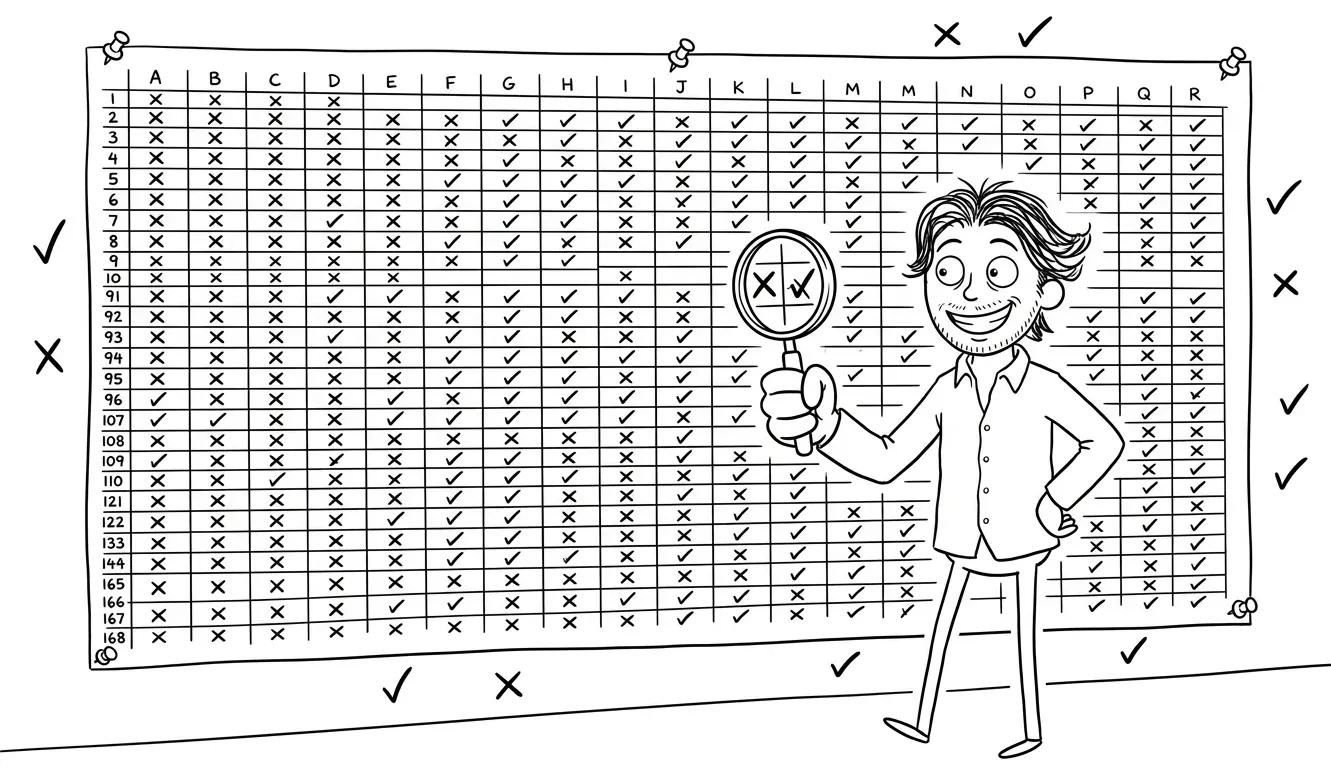
I started with the question that had been bugging me for weeks: which platforms actually let AI crawlers in? If the citation game is real, the substrate matters. A platform that blocks GPTBot in its robots.txt is invisible to ChatGPT no matter how much you post there. A platform that lets every AI crawler through is high-value real estate.
I researched 168 platforms. Verified robots.txt for every major AI crawler (GPTBot, ClaudeBot, PerplexityBot, Google-Extended, and a dozen smaller ones). Built a scoring system that weighted discoverability, content type, indexing speed, and authority. Out of the 168, 142 were AI-discoverable, 74 scored as high GEO value, 78 medium, and 16 low.
I open-sourced everything.
awesome-geo(github.com/deeflect/awesome-geo) is the curated list, the verification scripts, and the scoring logic. MIT-licensed. Use it, fork it, send PRs when you find a platform I missed.- geo.deeflect.com is the website I built around it. Free tools, no email gate: AI Visibility Checker, JSON-LD generator,
llms.txtgenerator, meta-tag generator,robots.txtgenerator. The kinds of things I was doing manually in a terminal until I got tired of it.
I built it because I was doing the work manually and it sucked. Now it doesn’t suck for anyone else either. That’s the whole pitch.
There are 24 open-source repos and tools referenced inside awesome-geo that I didn’t write. Other people’s good work. The GEO field is small enough right now that you can read most of it in a weekend.
What to do right now
If you’ve read this far and you want a checklist before I shut up, here it is. Five moves. Ordered by effort-to-impact.
- Check your
robots.txt. Make sure GPTBot, ClaudeBot, PerplexityBot, and Google-Extended are not blocked unless you have a real reason. Most “block all bots” rules from 2019 are now blocking your own AI visibility. (The geo.deeflect.comrobots.txtgenerator does this in two clicks.) - Add structured data. JSON-LD for Person, Organization, Article, and FAQPage on the pages where it fits. Schema is the model’s cheat sheet. (See the JSON-LD generator on geo.deeflect.com if you don’t want to write it by hand.)
- Create an
llms.txtfor your domain. This is the emerging convention for telling language models what you are, what’s authoritative on your site, and where the canonical content lives. It’s cheap, it’s reversible, it costs nothing to add. (Generator is on geo.deeflect.com.) - Get serious about entity presence. Wikidata, the unblocked AI-discoverable platforms in
awesome-geo, consistent bio, consistent name, same headshot. The model is trying to figure out if you’re one entity or seventeen. Help it. - Track brand mentions, not just backlinks. Set up alerts for your name and your brand on every surface that supports them. The 0.664 vs 0.218 stat says this is where the signal lives now.
That’s the floor. There’s more. There’s a lot more, actually. That’s what the rest of this series is for.
TL;DR
- AI search has changed the distribution game. CTR on queries with AI Overviews is down ~30%.
- SEO is not dead. 99.5% of AI citations still come from the top 10 organic results. SEO is now the prerequisite for GEO.
- GEO is the second sport: getting cited in the answer instead of ranking on the page. Citation density and statistics density are the two biggest levers (Aggarwal et al., KDD ‘24).
- Brand mentions correlate with AI citation at 0.664. Backlinks at 0.218. Distribution beats acquisition.
- I researched 168 platforms and open-sourced the scoring at github.com/deeflect/awesome-geo and geo.deeflect.com.
- Five moves to make today: fix
robots.txt, add JSON-LD, shipllms.txt, lock entity presence, track mentions.
FAQ
What is GEO (Generative Engine Optimization)? GEO is the practice of optimizing content so language models cite it in their answers. The term was formalized in the Aggarwal et al. KDD ‘24 paper, which found certain page-level moves can boost generative-engine visibility by up to 40%.
Is SEO actually dead in 2026? No. seoClarity’s 2025 data shows 99.5% of AI Overview citations come from the top 10 organic results. SEO is now the prerequisite for being eligible to be cited. The article title is rhetorical.
How is GEO different from SEO? SEO optimizes for ranking a page. GEO optimizes for getting cited inside a generative answer. The two share most of the underlying signals (good content, technical hygiene, authority) but GEO weights brand mentions, citation density, and statistics density more heavily.
How do I get cited by ChatGPT, Claude, or Perplexity? The short version: rank well on Google for the query first (because that’s where the engines pull most candidates from), make sure AI crawlers can reach your content, add JSON-LD schema, write with concrete numbers and named sources, and build entity presence so the model can identify you across the web.
Do I need to write an llms.txt file?
It’s an emerging convention, not yet a standard. It’s cheap to add and reversible. I recommend it for any site you care about being correctly understood by language models. The geo.deeflect.com llms.txt generator handles it in a few clicks.
Are backlinks still useful for AI search? Yes, but less than you’d think. Ahrefs’ 2024 data put backlink correlation with AI citation at 0.218 versus 0.664 for brand mentions. Backlinks remain important for the SEO foundation. Mentions, even nofollow ones, do more work for the AI layer.
What’s awesome-geo?
An open-source, MIT-licensed list of 168 researched platforms with their AI-crawler accessibility, GEO value scoring, and verification scripts. Lives at github.com/deeflect/awesome-geo.
Where this goes next
This is part one. The intro. The setup.
The next pieces in this series go deeper. I’m publishing original tests on which AI crawlers actually pick up changes how fast, comparative data on which platforms move the citation needle for new entities, the full scoring methodology behind the 168-platform list, and the running build log of geo.deeflect.com as I add tools to it.
I’m also writing a sister piece on the SEO-to-GEO gap specifically, formalized in a paper I posted on SSRN covering ranking-factor divergence between traditional and generative search.
If you build, ship, or write online and you’re tired of vague AI-marketing energy, this is the lane.
I asked ChatGPT who I am and it didn’t know. By the time I’m done with this series, that’s not going to be true anymore. And the path I’m walking to get there is the same path you can walk for anything you’re trying to make legible to the new search layer.
SEO isn’t dead. It just got a co-pilot.
Project links:
awesome-geo(open source): github.com/deeflect/awesome-geo- Free GEO tools: geo.deeflect.com
- The SEO-to-GEO Gap (SSRN paper): papers.ssrn.com/sol3/papers.cfm?abstract_id=6476021
Related reading:
- Prompt engineering was dead on arrival
- AI has terrible UX and nobody’s saying it
- How I debug agents that won’t shut up
- Why I quit fintech to build AI products
Dmitry “Dee” Kargaev. Indie AI builder. I write about the design-to-code gap, agent systems, and what’s actually working in AI distribution. Follow @deeflectcom for the next piece in this series.