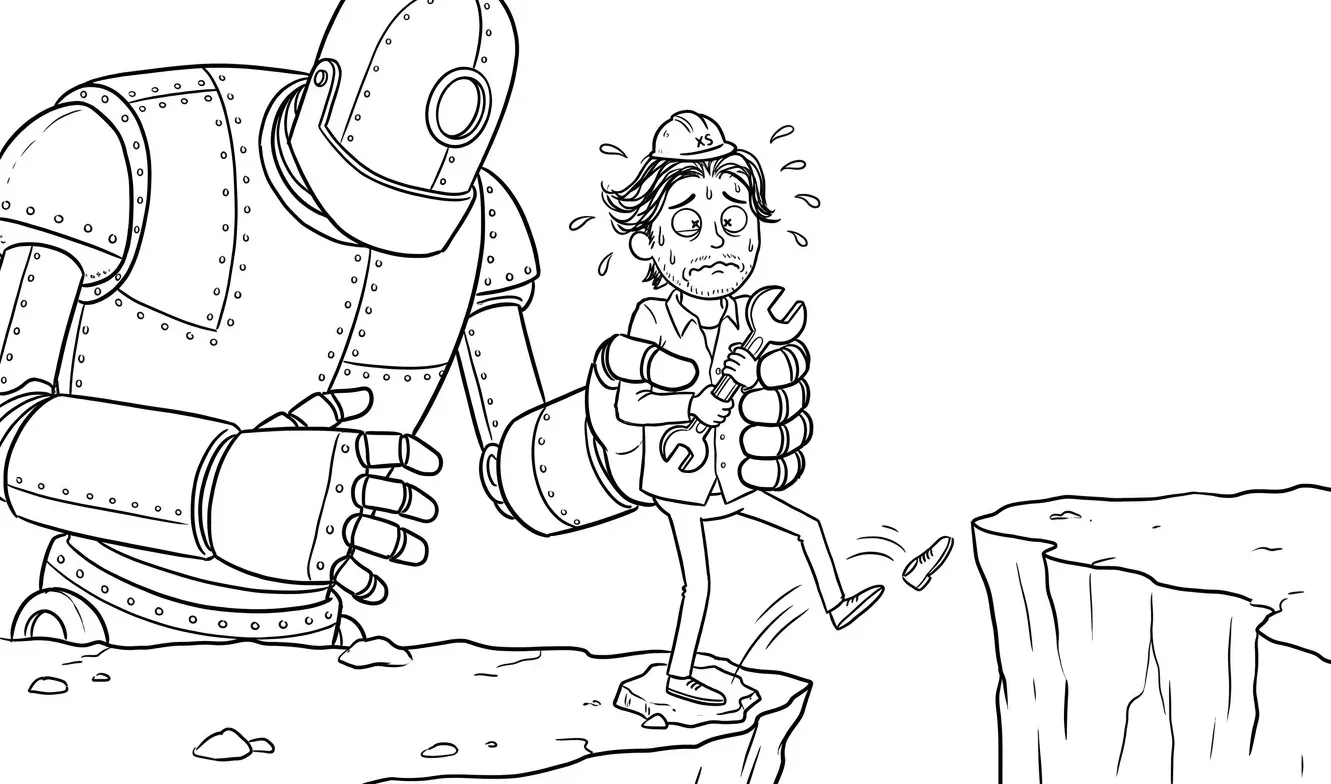
I wrote a book. It’s called Don’t Replace Me: A Survival Guide to the AI Apocalypse, and it’s available right now on Amazon in Kindle, paperback, and hardcover. The announcement for Don’t Replace Me survival guide dropped March 28, 2026 - press release picked up through AP News and everything. 235 pages, 24 rules, 33,000 words.
Took me way longer than I expected and was nothing like I expected. Let me explain what it actually is and how it got made.
Why Don’t Replace Me exists as a book and not just tweets
I’ve been getting a version of the same conversation for two years. Someone finds out what I do - AI engineering, building agents, 15 years in product design - and they get this look. Half curiosity, half dread. Then the question: “So… should I be worried? About my job?”
The honest answer is complicated. Not “no, you’re fine” and not “yes, start learning Python immediately.” The actual answer depends on what you do, how you do it, and whether you understand what AI is actually replacing versus what it’s just augmenting.
The loudest voices on this topic tend to be at the extremes. Either AI builders who are close enough to the technology that the disruption looks like opportunity from where they’re standing. Or people far from it who are doom-scrolling tech Twitter and convinced everything is gone. Both are wrong in ways that matter to normal people with real jobs.
I’ve sat on both sides of that divide. I spent five years designing products at VALK - financial infrastructure for 70+ banks across 15 countries, $4B+ in deals running through platforms I helped design. I was building for institutions. Then I pivoted to building the automation itself. Multi-agent systems, AI workflows, the actual pipelines that companies are now using to cut headcount or redeploy people.
I’ve talked to people on both ends. Executives excited about efficiency. Employees scared about what “efficiency” means for them personally. And I kept having the same thought: someone should write something honest about this. Not a hype piece, not a manifesto, not a beginner’s guide to ChatGPT. Something from the middle.
So I did.
What Don’t Replace Me is and what it isn’t
Don’t Replace Me is not a coding tutorial. It’s not a prompt engineering guide. There are plenty of those and they’re mostly aimed at people who already know what a terminal is.
This is for my mom. For my friend who does project management at a mid-size company and genuinely doesn’t know if her job will exist in three years. For the copywriter, the customer service manager, the paralegal, the graphic designer who keeps seeing LinkedIn posts that make them feel like they missed the boat.
24 rules. Each one practical, specific, and grounded in things I’ve actually seen. Not “embrace AI” or “upskill your journey” or whatever LinkedIn thought leadership nonsense. Real career advice for people navigating a real transition.
The companion site is at dontreplace.me and it has a free AI threat assessment quiz. You answer questions about your actual job - what you do day to day, how structured the work is, how much it involves judgment vs.execution - and you get a risk score. Not fearmongering, not false reassurance. Just a calibrated read on where you actually stand.
Three formats available now: Kindle, paperback, hardcover. Audiobook is in production. If you’ve been waiting for audio, it’s coming.
ASIN on Amazon is B0GTX4J124. Paperback ISBN is 9798253164594. Hardcover is 9798253165386. I’m mentioning these in case you’re the kind of person who looks these things up. You can also check out the book’s website at dontreplace.me for more info and the quiz.
How I made this and why I’m being upfront about it
I used AI to write this book. I’m not hiding that, and I’m not embarrassed about it. But it’s not what people assume when they hear it.
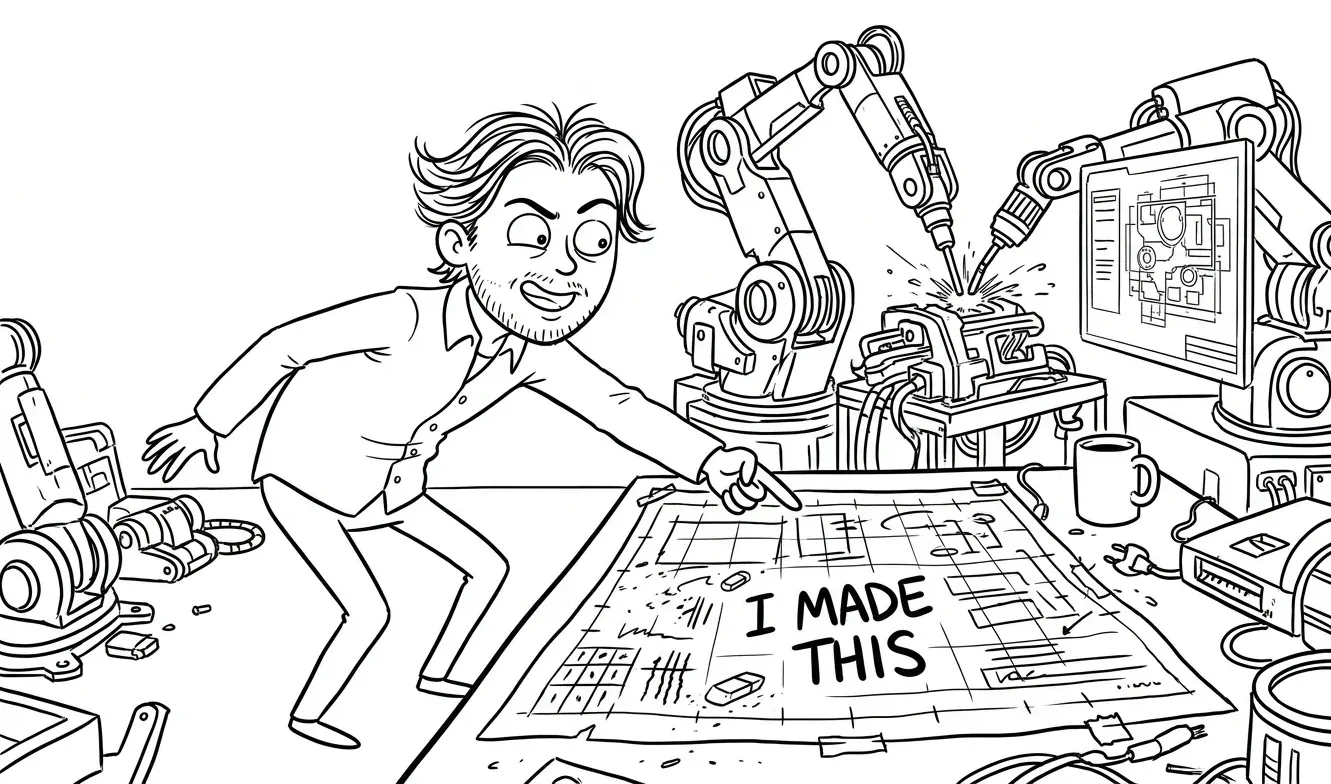
I didn’t type “write me a 235-page career guide” and hit enter. That’s not how this worked.
What I did: I spent months collecting actual opinions. Notes from real conversations. Observations from years of watching companies get disrupted from the inside. Things that frustrated me. Things I genuinely believe. Specific examples from fintech, from AI engineering, from watching product design go through its own automation panic. I had a lot to say - just scattered across voice memos, Notion drafts, Twitter threads, and conversations I kept having with people who were scared.
All of that went into the process as fuel. The AI was the engine. The substance is mine.
The result reads like me because it is me. My takes, my experience, my perspective on what’s changing and what isn’t. I used every tool available to get it out of my head and into something usable. Which is exactly what the book tells readers to do - use AI as leverage, not as a replacement for your own thinking.
The irony is the point. I couldn’t have written a better proof of concept.
And honestly, if you’re going to argue that this makes the book less valid - that’s a conversation worth having, and it’s one of the conversations the book is designed to prompt. Because that reflex, the instinct to devalue work because AI was involved, is exactly the kind of thinking that will hurt people’s careers over the next decade. The question isn’t “did a human do every part of this.” The question is: is the thinking real? Is the perspective genuine? Is it useful?
Yes, yes, and I think so.
What 15 years of watching tech cycles taught me about this one
I started freelancing at 14. I’ve watched design go through “designers will be replaced by templates.” I watched developers go through “no-code will replace engineers.” I watched writers go through “content mills will replace real writing.” Some of that disruption was real. A lot of the fear was misdirected.
This cycle is bigger. I won’t pretend otherwise. The things AI is genuinely good at - pattern recognition, synthesis, first-draft generation, handling repetitive decisions - overlap more directly with white-collar knowledge work than previous automation waves did. This isn’t just factory floors and truck drivers. It’s reaching into offices.
But the shape of the threat is different for different people. And most of the advice out there treats it like a monolith. “Learn to prompt” is not useful advice for a nurse. “AI can’t replace human connection” is not useful advice for a data entry specialist.
What actually helps is specificity. Understanding which parts of your work are high-judgment versus low-judgment. Understanding where your industry is in the adoption curve. Understanding the difference between “AI will do this task” and “AI will make someone else more efficient at your job.” The second one is actually the bigger risk and people underestimate it.
That’s what the 24 rules get into. Specific, not vague. Grounded in real patterns I’ve watched play out, not hypotheticals.
If you want a preview of where my head is at on some of this, I’ve written about leaving fintech to build AI systems, about what ADHD and AI actually look like together, and about why most AI products have terrible UX - the gap between what builders understand and what real users need. The book is longer, more structured, and aimed at a wider audience, but those posts give you a sense of how I think.
Who Don’t Replace Me is actually for
Specifically, concretely:
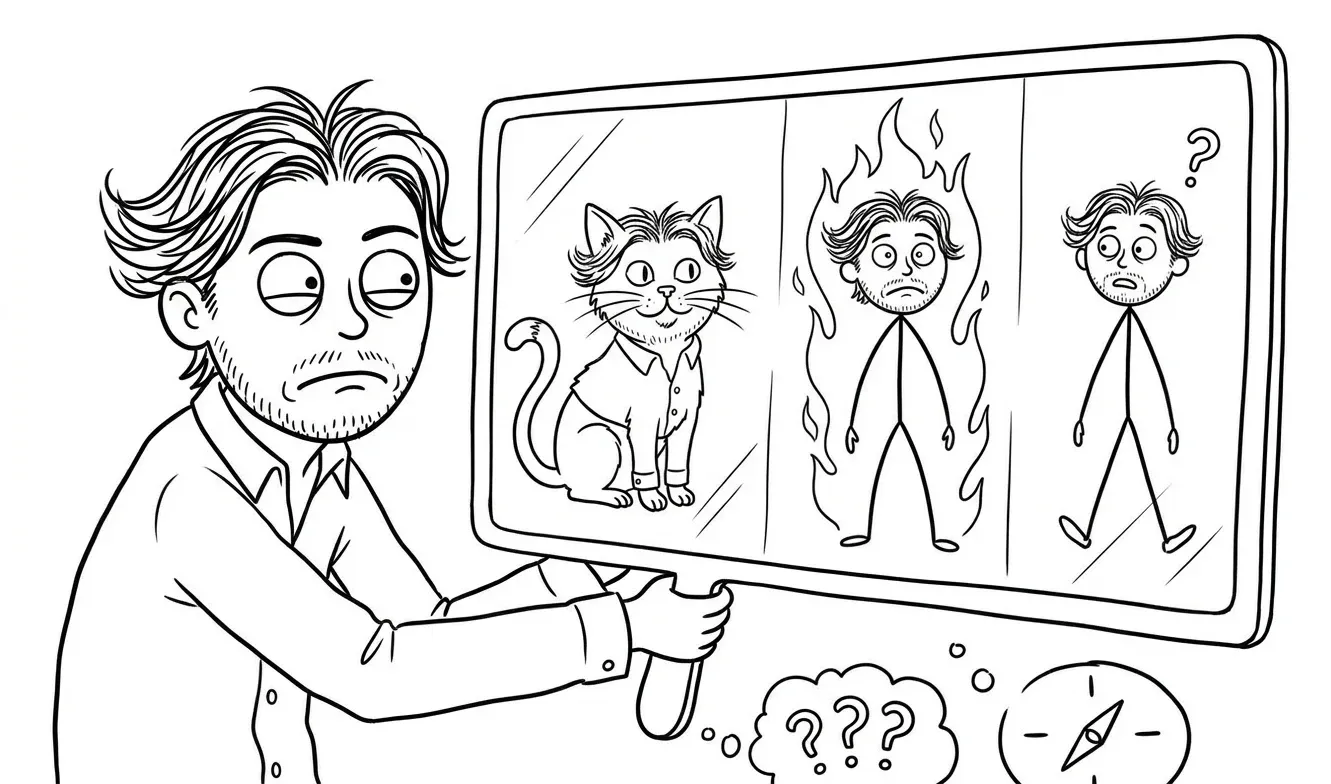
If you have a job and you’re not sure whether to be worried, this is for you. Not to soothe you with “AI can’t replace humans” and not to panic you into a six-month bootcamp. To help you actually assess your situation.
If you manage people and you’re trying to figure out how to talk to your team about AI adoption without sounding like either a corporate automaton or someone who’s out of touch, there’s stuff in here for you.
If you’re in a creative field - design, writing, marketing - and you’ve already felt the job market shift, there’s a section of this that I think is genuinely useful. Not “here’s how to compete with AI” but here’s how to think about what you’re actually selling.
If you already know about AI and want something to send to a family member who keeps calling you asking what to do - this is that thing.
The technical people are not the audience here. My coding stack post or the deep dive on debugging AI agents is more your speed. This book is for the people those systems are being built around.
Where to get it
Amazon has all three formats right now — grab it here or search “Don’t Replace Me Dmitrii Kargaev.”
The companion site is dontreplace.me - free quiz, takes about five minutes, gives you a real threat assessment based on your actual role. Even if you don’t buy the book, the quiz is worth doing just to have a concrete picture instead of ambient dread.
Audiobook is in production. I’ll announce it here and on my portfolio site when it drops.
If you read it and have thoughts - what landed, what you disagree with, who you think needs to read it - I want to hear that. Building in public means the feedback loop stays open. This isn’t the end of the conversation, it’s more like a long, structured version of it.
The people I had in mind when I was writing this are real. If you know someone who’s been quietly scared about this stuff, send it to them. That’s what it’s there for.